
Age 16 – Set up a conservative, growth-stock mutual fund and start investing early.

It is true, MOST 16-year-olds aren’t interested in saving for their financial future when they’re working part-time in high school. I know I wasn’t. When I was 16-years-old, I was interested much more interested in shopping at the mall, paying for indie rock concerts and putting gas in my car. Saving isn’t fun or sexy. It’s hard to make those monetary sacrifices when it feels like you’re already making so very little.
Yet, now that I know about the time value of money and the power of compound interest, I realize just how impactful small investments early on would be for my financial stability as an adult.
For example, if I’d invested just $16,092 by the time I turned 27-years-old in a mutual fund making just 10% annual return (which is on the low-end of average) and NEVER invested anything further for the rest of my life, I’d have somewhere near $1.1 million for retirement at age 65. I’d retire as a millionaire on those 11 years of early investing alone! That’s assuming no future investing or saving for the rest of my adult life. Craziness!
Does $16,000 in investing for a 20-something-year-old seem like a big ask? Well, when you break it down into what that means monthly, it really isn’t that much.
Age 19-27 – invest just $1620/year OR $135/month = $14,580

That’s a total of $14,580 in investment saved away to grow into $1 million+ for me to enjoy in my retirement!!!!!
I started working a part-time minimum-wage job when I was 16-years-old. Even though I didn’t make much, I definitely could have afforded $42/month had I better prioritized my spending and saving. C’mon, little Megan!
As a 19-year-old, there was one point when I was working THREE part-time jobs while putting myself through college courses – and passing thank you very much (if barely at times). There was a 6- to 8-month period when I was working some evenings at a local gift store and other nights at a local bakery and on weekends I worked with a catering business. I definitely could have afforded to put aside $135/month. On top of that, I had some scholarship funding to pay for much of my tuition, room & board throughout undergraduate school. AND I had taken student loans to cover the remainder, so I really should have had tons of extra income to put toward savings and investing. Yet, today, I honestly cannot tell you one single smart purchase that I made during that time. I wasted that money away on “fun money,” tailgating and car payments that were probably too high for me as a young adult. Today, I have nothing to show for that time in my young life when I was working my BUTT OFF.
Age 18 – Take a gap year after high school OR spend the first two years of your college career in community college.

When I was 18-years-old in the first year of my college career at a state university, I was focused on having fun and learning to live on my own. I wasn’t taking classes shall we say, “seriously.” I was coming into myself, I was establishing my identity, I was learning to manage day-to-day stress and I was partying and chasing after boys. I lived in expensive campus housing and purchased the required and costly meal plan. 18-year-old me was not getting the most out of her college education . . . AND I was a good student, all things considering! I attended most classes (true, I fell asleep in some of the a.m. classes), I decent effort on homework and projects, I cared about passing, only dropped one single class, and 5 years later I earned my B.A. with a 3.6 GPA. Today, the nerd-professor and academic in me cringes to think about how fast and loose I was with the privilege and advantage I’d been given. More than simply doing the bare minimum requirements, a serious student who was focused and passionate about his/her education would have made the very most of higher education. He/she would have invested in themselves, developed a resume of transferrable skills and gained mastery in the major of his/her choice. I simply made the grade and was content enough to do so.
Today, I’d go back and tell myself to take a gap year to work and travel until I had a better picture of what I wanted to do. I’d save up for I’d seek out mentors and utilize the year for personal development.
OR, if I absolutely felt like I’d be left behind if I didn’t start college right out of high school, I’d at least attend the first two years of college at a local community college before transferring to a state college. No employer cares whether or not you attended all four years of college at a state university. Employers want to know that you’re employable. The fact that you’ve earned a degree from any institution demonstrates that you’re disciplined enough to follow through on difficult goals. Employers will ask you where you graduated from, but never about where you started your college career.
Age 20 – Don’t buy that new car!!!

I’ve owned 5 cars in my lifetime. Two of these cars were brand new cars. I now fully understand how stupid it is to buy a brand new car – any new car – even if it is a dependable and unsexy one.
Carrying car debt is some of the stupidest debt we can carry as consumers. As most people know, cars lose as much as 10% of their value within the first month of owning them. That means I threw away $2,100 in the first month of owning my 2012 Honda Civic. That’s a significant chunk of money for someone making $45,000/year as an adjunct instructor; it was more than double the living expenses I was paying each month at that time. If you’d have given me $2100 in cash and told me that I could a) keep it or b) throw it straight down the toilet, I’d have kept it every single time.
We enjoy our cars and driving new ones feels good. But they are frankly idiotic purchases for anyone who is not a millionaire. Cars depreciate in value. When we finance our cars, we pay interest on something that is going down in value. We pay more and are getting less! This is financial sabotage.
I’ll never purchase a new car again for the rest of my life.
Age 21 – Get educated about financial benefits
I’ve never been afraid of hard work. I held dozens of part-time jobs in my teen and tween years. My first job was at a Dairy Queen when I was in high school. In college, I worked at Panera Bread, Carlton Cards, Mimi’s Cafe, LeeRoy Selmons, Cici’s Pizza, Quiznos, Outback Catering and the Tampa Convention Center. I’m sure I’m forgetting others. As I entered into my professional career, I began teaching as an adjunct instructor and to earn a respectable salary I taught across three different colleges at five separate campus locations.
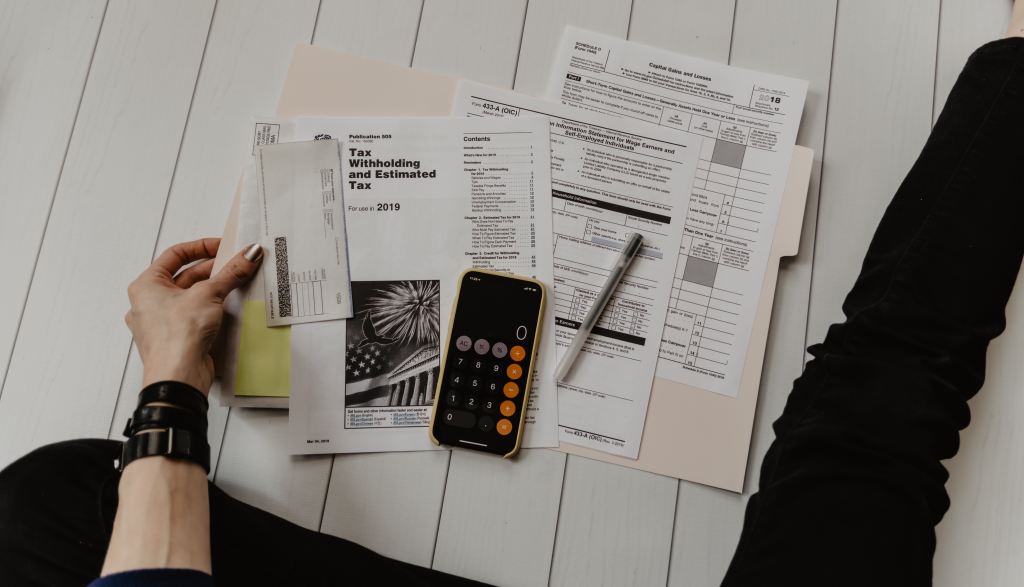
Through it all, I never invested the time to truly learn about what financial benefits were available to me and how to make the most of them. I was too lazy or embarrassed to ask anyone about these kinds of financial questions. What was a 401(k)? How is this different from a 403(b)? How do I best utilize my health benefits so that I am not unnecessarily paying out-of-pocket? I was too short-sighted to think beyond maximizing the take-home pay on my next paycheck. I was content enough to understand how to simply file my taxes.
I cringe at the thought of the financial savings opportunities I may have passed up. What savings plans had I simply lost track of? Where have I thrown my money away? I trusted in the fact that others would point out my financial foibles and help me to manage my money. How naive. For if we don’t take care of our own money, who is going to do this for us?
I feel our society desperately needs more education on smart money management and personal finance. I WISH I’d been required to take financial courses in high school and college. But until these things change systemically, it is up to each one of us to self-educate on these matters.
Age 28 – Hire a financial advisor and investment professional.

This one is not a tough one that needs much explanation.
Financial experts are much more equipped to give advice on financial responsibility than those without any knowledge of finances. I wish I’d have shopped around for a financial advisor at age 30. I wish that I had gotten over the embarrassment of not being as financially accomplished as I felt I needed to be to have a financial advisor, to begin with. A good financial advisor that I trusted to objectively manage my money better than I could manage myself making more emotional decisions would have changed the game for me. This could have been a pivotal moment in my personal finance journey that changed my mindset about money, savings, and long-term investments.
Bottom line: Get professional help where you need it. Seek out tough love. Find someone who will keep you accountable and tell you the harsh truths.
For now, the best I can do is make peace with the mistakes I’ve made and learn from them. I hope that my readers benefit from the mistakes I’ve made so that they avoid making these mistakes themselves.
 Megan Case